



Clinical report nº1
Analysis of responder profile
Courtesy of Dr Léa Turpin. Nuclear Medicine Physician. Foch Hospital. Suresnes, France.

79 year-old man with metastatic castration-resistant prostate cancer (mCRPC)
Patient’s history
2006
Radiotherapy + androgen deprivation therapy (ADT)
2009
Lymph node and retroperitoneal recurrence → ADT
2014
Abiraterone
2021
Enzalutamide, followed by Docetaxel → stable disease
2022
Cabazitaxel
2023
Darolutamide
2023
6 cycles of 177Lu-PSMA-targeted radioligand → good clinical and biochemical response
2023-25
Darolutamide
September 2025
Clinical and biochemical recurrence
Due to new disease progression, treatment with 177Lu-PSMA-RPT (radioligand therapy) was initiated in September 2025.
PET/CT
Two PSMA PET/CT scans were performed
A baseline PSMA PET/CT to assess eligibility for 177Lu-PSMA-RPT1
And a follow-up PSMA PET/CT after three cycles of 177Lu-PSMA-RPT to assess response1
Acquisition: 90min post PSMA radiopharmaceutical injection
PYLCLARI AI® software was used for quantitative analysis of PSMA radiopharmaceutical uptake and treatment response assessment.
PSMA PET findings
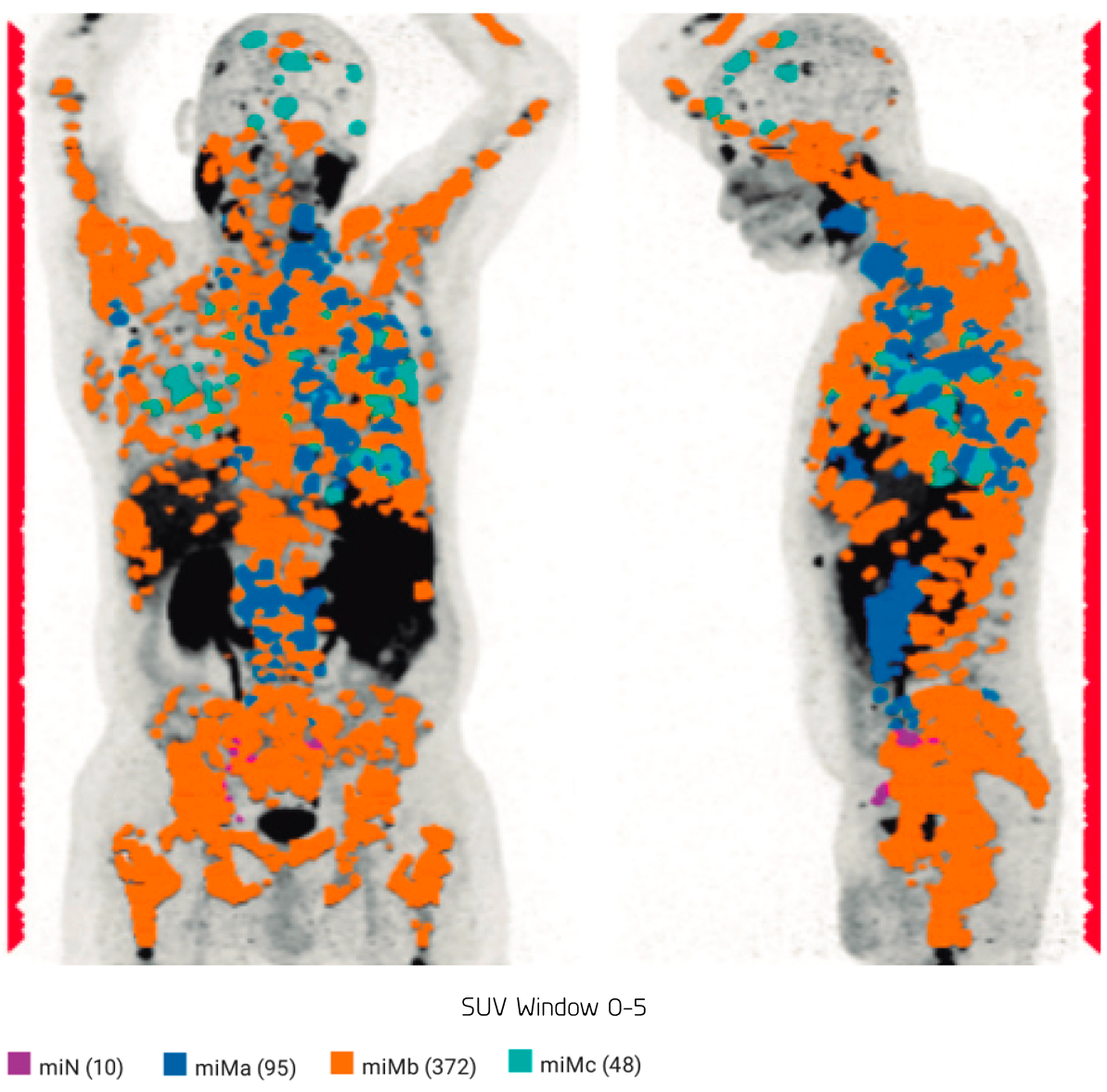
Baseline PSMA PET
Multiple PSMA-avid lesions in lymph nodes, bones, brain and lungs.
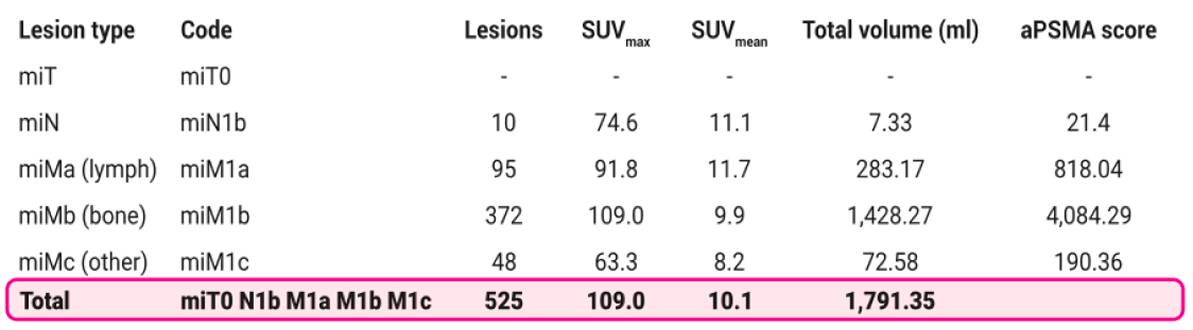
Total Tumor Volume (TTV): 1,791.5 ml
- Volume in the bones: 1,428.27 ml
- Volume in the lymph nodes: 283.17 ml
Markedly elevated metabolic tumor burden:
- Whole-body SUVmax: 109.0
- Whole-body SUVmean: 10.1
Total Tumor Volume (TTV): 1,791.5 ml
- Volume in the bones: 1,428.27 ml
- Volume in the lymph nodes: 283.17 ml
Markedly elevated metabolic tumor burden:
- Whole-body SUVmax: 109.0
- Whole-body SUVmean: 10.1
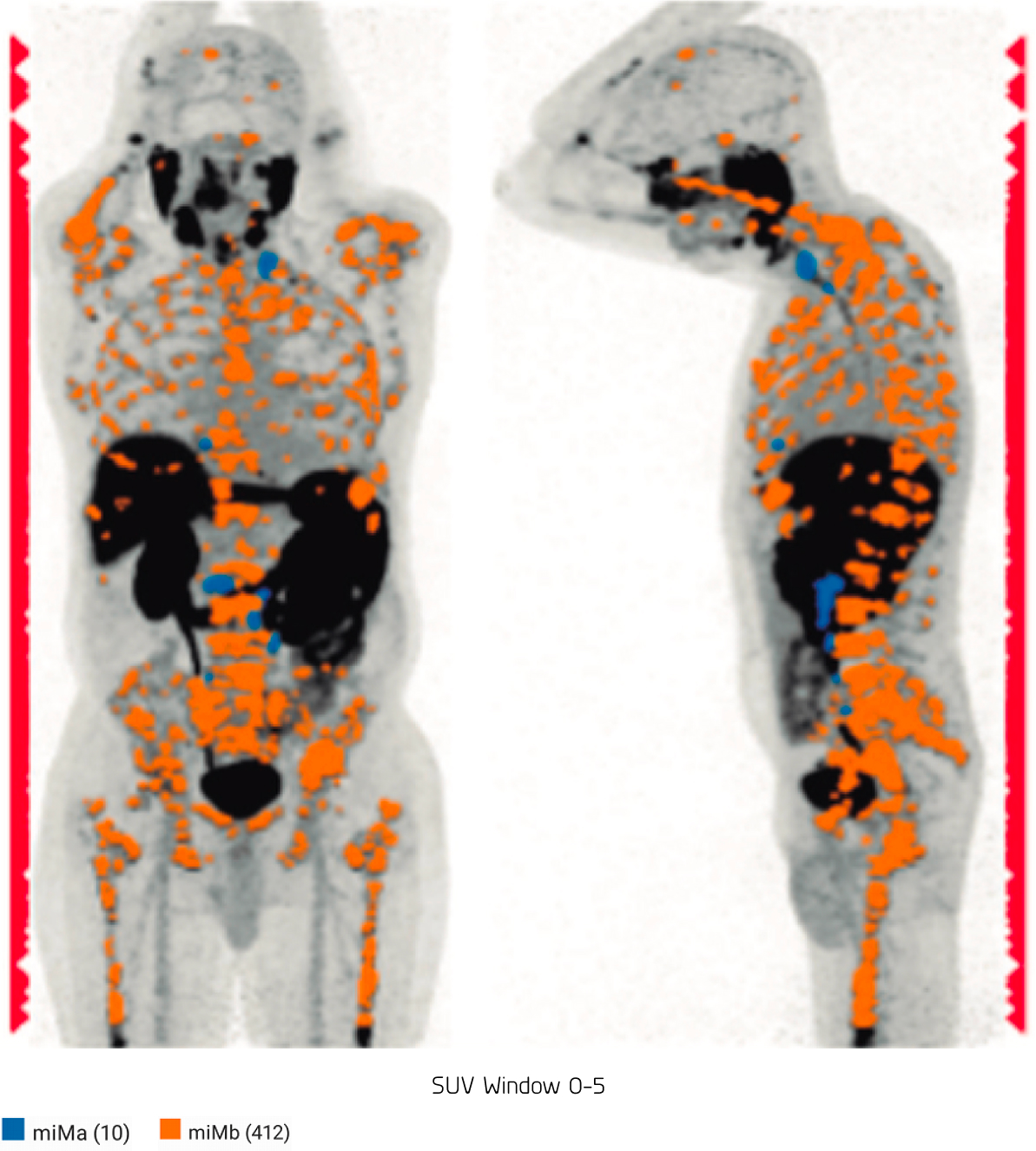
Follow-up PSMA PET
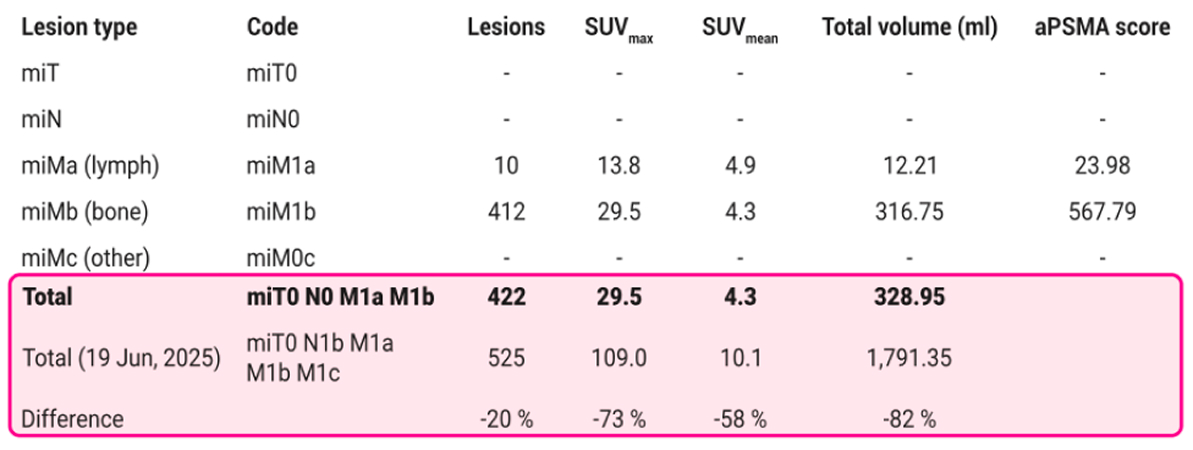
Marked reduction in Total Tumor Volume (TTV): 328.95 ml (-82%)
- Volume in the bones: -77%
- Volume in the lymph nodes: -95%
Decrease in PSMA radiopharmaceutical uptake
- Whole-body SUVmax: -58%
- Whole-body SUVmean: -73%
Complete metabolic response in the brain and lung lesions.
- Volume in the bones: -77%
- Volume in the lymph nodes: -95%
Decrease in PSMA radiopharmaceutical uptake
- Whole-body SUVmax: -58%
- Whole-body SUVmean: -73%
Complete metabolic response in the brain and lung lesions.

Discussion
- At baseline, increased PSMA radiopharmaceutical uptakes (SUVmax and SUVmean) reflected high overall PSMA expression, known to be associated with treatment response (2,3).
- Quantitative tumor metrics were used for treatment assessment according to guidelines (4,5).
- After three cycles of 177Lu-PSMA-RPT, the marked reduction in tumor volume confirmed a favorable therapeutic response (6).
- A greater decrease in PSMA radiopharmaceutical uptake was observed in lymph node lesions compared with bone lesions, a commonly observed pattern in clinical practice.
- This case highlights how baseline metabolic biomarkers, combined with longitudinal volumetric assessment during treatment, can provide robust and clinically relevant information to support an early decision on the therapy using PYLCLARI AI®. Based on these findings, the clinical decision was to continue 177Lu-PSMA-RPT.