



Clinical report nº2
Analysis of non-responder profile
Courtesy of Dr Léa Turpin. Nuclear Medicine Physician. Foch Hospital. Suresnes, France.

75 year-old man with metastatic castration-resistant prostate cancer (mCRPC)
Patient’s history
2015
Prostate adenocarcinoma, Gleason score 7 (4+3) → radiotherapy + androgen deprivation therapy (ADT)
2018
Local recurrence in prostate bed → High Intensity Focused Ultrasound (HIFU)
2019
Increased PSA, single bone metastasis (right iliac wing) → Stereotactic external beam radiation therapy (EBRT)
2023 - 01/2024
Multiple skeletal lesions on PSMA PET/CT
Enzalutamide
Darolutamide
Docetaxel
Due to new disease progression, treatment with 177Lu-PSMA-RPT (radioligand therapy) was initiated in July 2025.
PET/CT
Two PSMA PET/CT scans were performed
A baseline PSMA PET/CT to assess eligibility for 177Lu-PSMA-RPT1
And a follow-up PSMA PET/CT after three cycles of 177Lu-PSMA-RPT to assess response1
Acquisition: 90min post PSMA radiopharmaceutical injection
PYLCLARI AI® software was used for quantitative analysis of PSMA radiopharmaceutical uptake and treatment response assessment.
PSMA PET findings
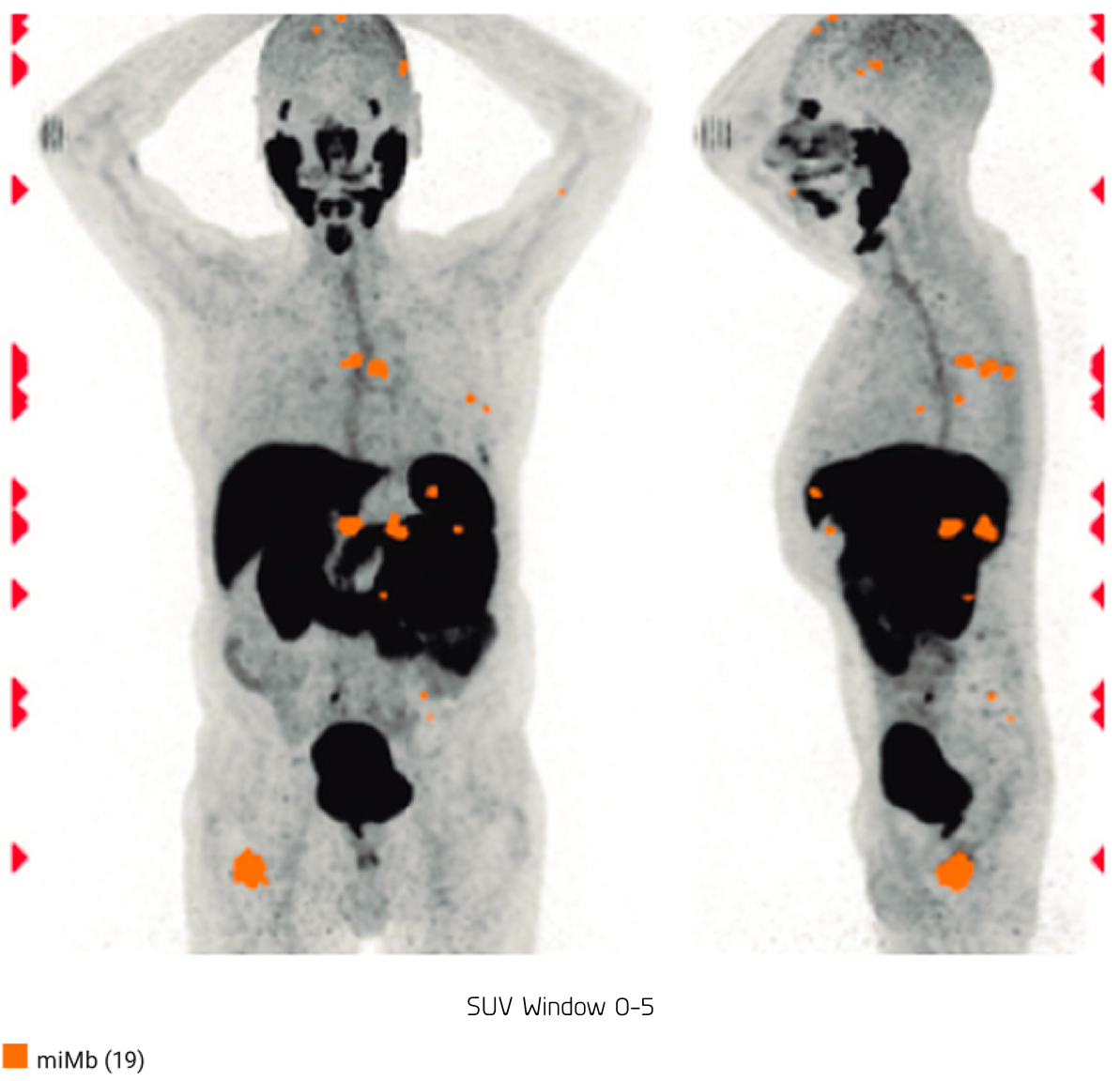
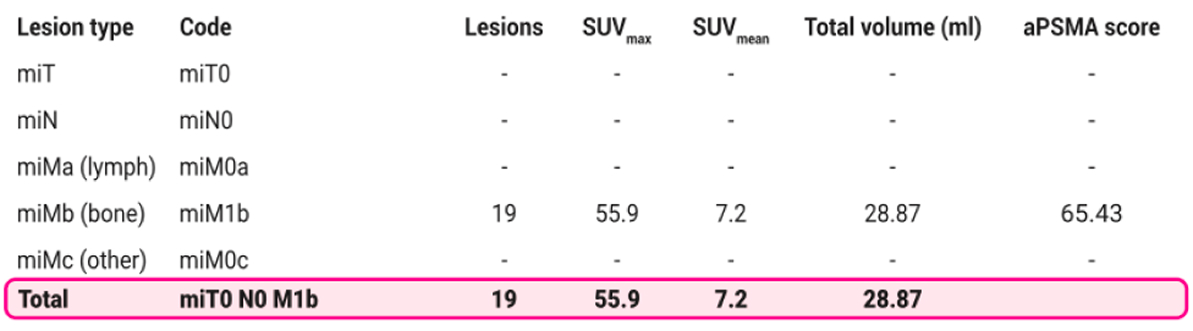
Baseline PSMA PET
Low Total Tumor Volume (TTR): 28.8 ml
Elevated whole body SUVmax (55.9) and SUVmean (7.2)
Elevated whole body SUVmax (55.9) and SUVmean (7.2)
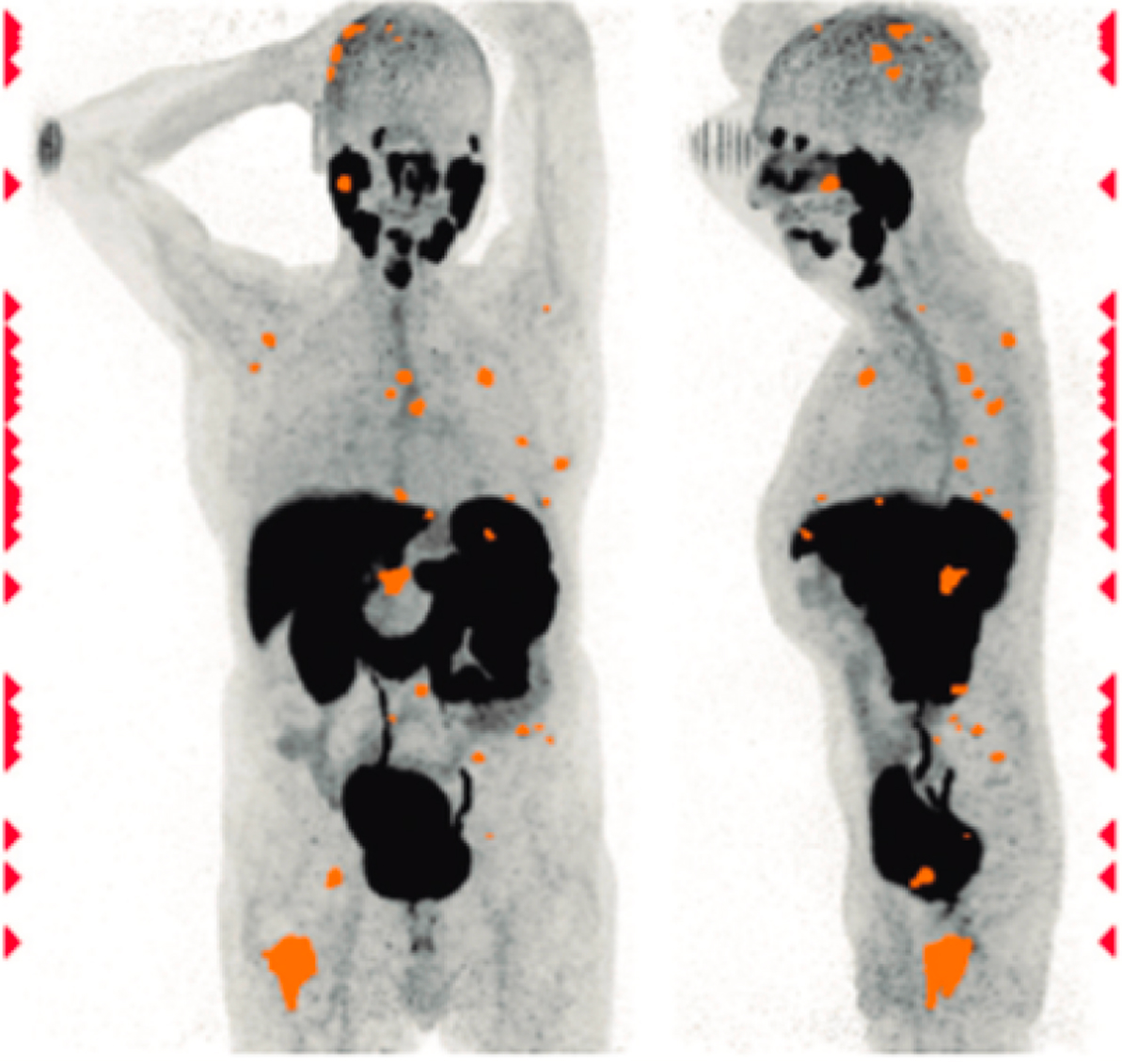
Follow-up PSMA PET
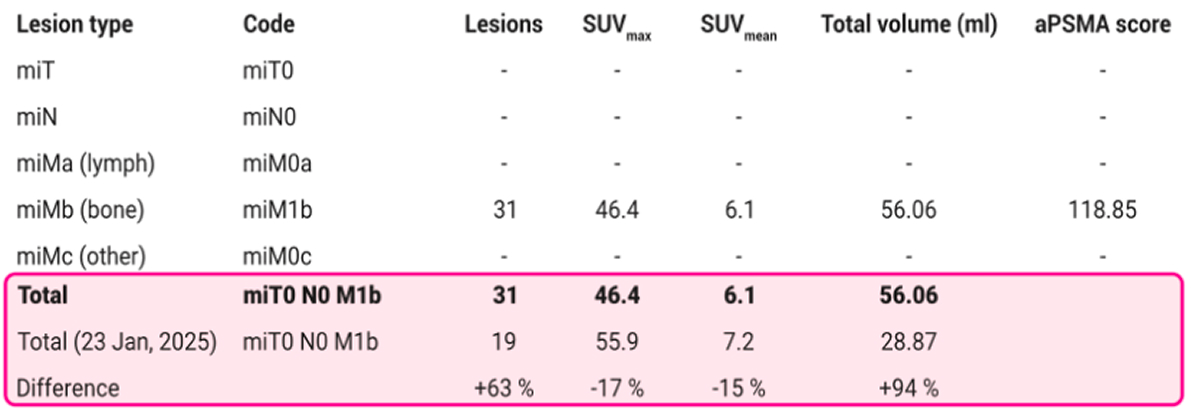
Total Tumor Volume (TTV) increased up to 56.06ml (+94%)
New lesions: appearance noted in the skeleton.
PSMA radiopharmaceutical uptake slightly decrease
- SUVmax: -17%
- SUVmean: -15%
New lesions: appearance noted in the skeleton.
PSMA radiopharmaceutical uptake slightly decrease
- SUVmax: -17%
- SUVmean: -15%

Discussion
- While SUV parameters may help predict outcomes from baseline PSMA PET/CT, factors contributing to resistance to RPT remain incompletely understood.
- Even though this patient showed favorable SUV parameters on the baseline PSMA PET/CT, clinical and metabolic assessment after two cycles of RPT demonstrated progression of the disease.
- For treatment response assessment, the most relevant parameters are the change in total tumor volume and/or the appearance/disappearance of new lesions (4).
- Therefore, given the challenging visual assessment, the use of semi-automated segmentation software proved to be valuable.
- SUV parameters were not sufficient to reliably assess treatment outcome in this case (5).
- This case reports how PYLCLARI AI® integrates longitudinal imaging data to identify non-responders early, thereby supporting treatment adaptation.
- Due to clinical and metabolic signs of progression, treatment was discontinued.